
- transformation of economically important plant species, which are highly recalcitrant to Agrobacterium-mediated plant transformation,
- use of Agrobacterium for site-directed recombination to avoid random T-DNA integration,
- introduction of multiple “stacked” transgenes(Ziemienowicz, 2014)
Abstract
Nanobiotechnology significantly enhances plant genetic engineering procedures by using nanocarriers such as metal, carbon-based, and polymeric nanoparticles to transfect and transport nucleic acids and proteins to deliver genes with maximum efficiency and translation. It improves the ability of the plants to be transformed using Agrobacterium, poses gradual serious limitations concerning the transfer of genes, and enhances the tolerance of plants to stress. One example is gene editing Crispr/Cas which uses nanoparticles to promote appropriate procedures.In addition, by using nanosensors and nanodevices in practical work it is rather possible to control in the real-time province of gene expression as well as everything occurring around the modified organism, which in turn helps to increase the efficiency of producing genetic modifications. This development can also improve the quality of the harvested crops, and the production yield, play a role in fight against food shortage that is prevalent in the global world like today.
Key Words:
Nanoparticles, Plant Genetic Engineering, Genetic Modification, Biotechnology, Agricultural Innovation, Gene Delivery
Introduction
According to the UN, by the end of this year, the population will stand at 9. By 2050, the global population will grow to 7 billion and raise the need for agriculture. Climate change poses threats that aggravate social problems such as increased droughts, floods, and increased temperatures in our society. Skillful temperature, humidity, and rain-sensing systems for the betterment and safety of agricultural production present the solutions of the future (Hassan and Siddiqui, 2024).
The employment of nanoscale aspects in plant genetic engineering is of paramount importance to nanobiotechnology since it assists in the deposition of genetic materials as well as in the genetic modification and observation which is interconnected to agricultural yield and total food security as posited by Behl et al . , (2024). The numerous existing nanoparticles like liposomes, polymeric nanoparticles, carbon-based nanoparticles, etc., can effectively deliver nucleic acids, proteins, enzymes, and other bioactive molecules into plant cells with low degradation (Fashola et al., 2021). This makes it possible to have precise regulation of gene expression together with tools such as CRISPR/Cas when enhancing the desirable characteristics of crops, disease and stress robustness, and plant defense mechanisms of the same quality with optimum set time.
History of Nanobiotechnology:
Nanotechnology is a relatively new study that allows many types of substances to be developed including particulate matter which has one dimension smaller than 100 nm (nm)(Saleh, 2020) (Rind et al., 2023). The implementation of nanoparticles is new in agriculture and it requires additional research. The concept of nanotechnology was initially made public by Nobel Prize-winning American scientist Richard Feynman in 1959. Feynman gave a speech titled "There's Plenty of Room at the Bottom" at the Institute of Technology in California at the American Physical Society's annual conference(Baydaet al., 2019) (Pisano and Durlo, 2023). Approximately The word was originally used by a Japanese physicist named Norio Taniguchi fifteen years after Feynman's presentation "nanotechnology" to refer to semiconductor processes taking place at the nanoscale. The early 21st century saw an increase in interest in the developing areas of nanoscience and nanotechnology. President Bill Clinton spoke in support of funding studies in this emerging discipline on January 21, 2000, at a Caltech speech (Hullaet al., 2015). Ancient Egyptians used synthetic chemical procedures to create PdS2 nanoparticles with a diameter of around 5 nm for making hair dye. Fig; etc The term “nanotechnology” was described in the following way by Professor Norio Taniguchi of Tokyo Science University in a 1974 paper: “Nanotechnology’ mainly consists of the processing of segregation, consolidation, and deformation of materials by one atom or by one molecule.”
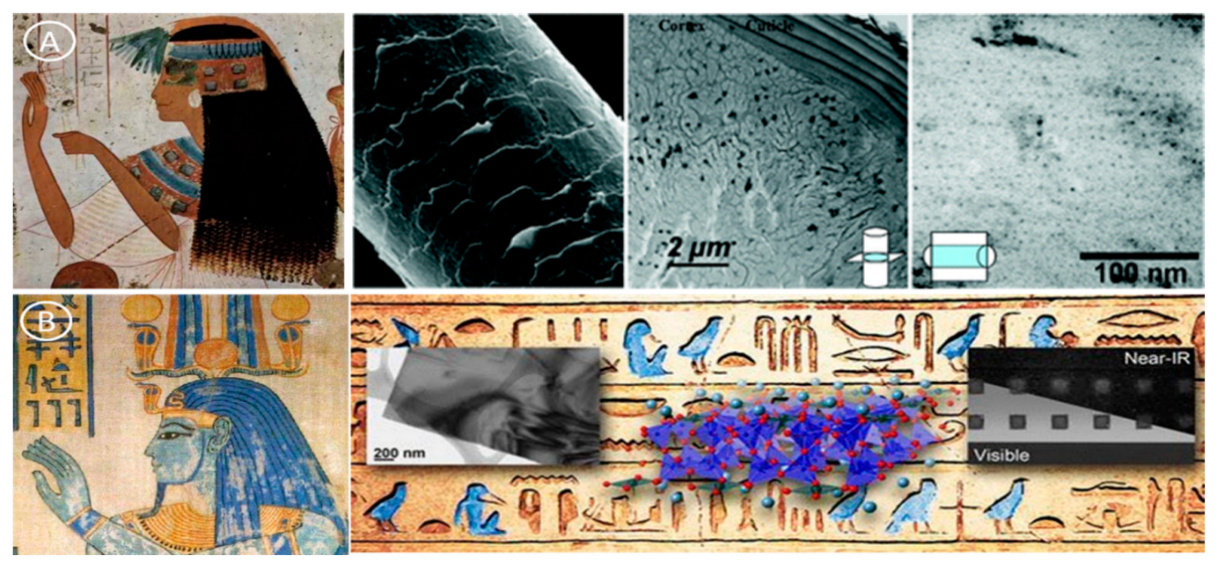
Fig.1. Human-made nanomaterials from earlier societies. (A) PdS2 NPs were made by Egyptians and used as a hair dye (Walter et al., 2006). © American Chemical Society, 2006; (B) Egyptians created Egyptian blue, or nanosheets of SiO2 and CaCuSi4O10, with a thickness of less than 5 nm.(Johnson-McDaniel et al., 2013) © American Chemical Society, 2013.
Characteristics of Nanoparticles
Physical: The surface plasmon resonance and light-interacting properties of nanoparticles made up of gold in nanospheres, having a size range from 20 to 100 nm are the primary areas of investigation in this study. Due to their singular characteristics and historical applications, these properties pique the interest of scientists (Sajid et al., 2020; Shaheen et al., 2023; Bora et al., 2024).
Chemical: Chemical properties dictate how NPs are used in chemical and biological engineering. The substance qualities of nanoparticles additionally change in light of their size and are dependent. Chemical compositions such as toxicity, oxidation, reduction, sensitivity, antifungal, and antibacterial properties are present in the stability of nanoparticles.
Conventional Methods of Transformation
Another area of biotechnology that has come to focus as early as the 1970 but perhaps intensified especially in the 1980s is the genetic transformation for crop improvement. From the study, the different techniques such as Agrobacterium-mediated transformation have improved crops such as tobacco, cotton, and maize as well as rice. Difficulties consist of low efficiency and random integration; therefore, techniques offering basic, affordable, and safe approaches toward constructing a cell with multiple copies of genes are required. Plants are transformed indirectly through the assistance of soil bacteria which include Agrobacterium species through plasmids in the target cells (Alekseeva& Kuznetsov, 2023; Gull& Jander, 2023; Adachi et al., 2021).
The ability to cause a crown gall disease is associated with the presence of Ti (tumor-inducing plasmid). This is the large (> 200kb) that carries the numerous genes involved in the infective process(Kuzmanovi?et al., 2023). Crown gall tumor in plants is caused by Agrobacterium tumefaciens by transferring a segment of DNA (transferred DNA or T-DNA ) from tumor-inducing (Ti) plasmid to the plant chromosomal DNA. This DNA segment is between 15 and 30kb in size(about 10% of plasmid size), depending on the strain type. T-DNA genes are involved in opine synthesis as well and they impart cancerous properties. After that, it was realized that the Ti-plasmid can help to insert a foreign gene into the plants if the new genes are inserted into the T-DNA region. Scientists used the disarmed Ti- plasmids as there is no role of cancerous genes in T-DNA transfer, only two 25bp repeat sequences found at the right & left borders are involved in the DNA transfer. Any DNA present between these two repeats is treated as T-DNA and can be transferred to plants. Infectivity is only controlled through virulence genes(Brown, 2020)(Azizi-Dargahlou and Pouresmaeil, 2023) T-DNA is integrated into plant genome when enters into the nucleus by illegitimate recombination a process likely mediated by host factors(Stepchenkovaet al., 2023).To improve the agrobacterium-mediated transformations scientists have developed a binary vector, super binary vector, and ternary vector for efficient work in dicots and monocots(Johnson et al., 2023). The type of agrobacterium, types of crops, types of explants, and types of vectors determine the efficiency of agrobacterium-mediated transformation.
However, tre sre still so many challenges that need to be addressed, including
Despite the fact that Agrobacterium is broadly utilized for quality exchange, its constraints require elective strategies. Direct quality exchange strategies, like polyethylene glycol (PEG) treatment, precipitate DNA onto protoplasts (Fizree et al., 2023; Duan et al., 2023). Microparticle siege liked for safe harvests like cotton and maize, permits without vector, multi-quality exchange to any organelle, including chloroplasts and mitochondria (Gao and Nielsen, 2012). Be that as it may, it can cause explant harm, lower plant improvement effectiveness, and quality quieting because of high duplicate numbers. It is likewise expensive because of the utilization of gold particles.
Nanoparticles – Mediated Biomolecule Delivery
Nanomaterials, containing nanoparticles with aspects of 1 to 100 nm, display exceptional actual properties contrasted with large counterparts, making them promising for quality exchange in plants (Modena et al., 2019). Using nanoparticles works with the conveyance of transgenes, upgrading plant science and horticulture, with quality vehicles considered to be significant for crop improvement and illness the board (Gad et al., 2020). Overcoming the size of the cell wall's exclusive limit of 5-20 nm remains a test (Zhang et al., 2019), especially for conveying biomolecules to establish organelles like plastids (Cunningham et al., 2018). Without force nanoparticle conveyance presents an answer, offering the potential for moving DNA, RNA, and proteins to propel plant hereditary designing (Wang et al., 2019). Techniques include streamlining nanoparticle size and surface properties for proficient cell wall infiltration and freight transport, expecting to reform plant biotechnology and yield improvement.
Types of Nanoparticles
Numerous applications exist for various nanoparticles, including silicon-based, metal-based, and peptide-based NPs. This study investigates pollen magnetofection, a method that allows for the direct production of transgenic seeds without the need for regeneration by transporting DNA into pollen through the use of magnetic fields. Even though it looks promising for crops like cotton, it's still not clear how effective it is. (Zhao et al., 2017; Mohamed et al., 2019) Genetic delivery of maize remains restricted to specific genotypes and requires lengthy tissue culture. In order to fertilize maize's female florets inbred lines, magnetic nanoparticles (MNPs) loaded with DNA that encodes either RFP or GUS resistance were introduced into pollen grains. The results show that using our genotype-independent pollen transfection technique, it was possible to successfully transfer exogenous DNA to superior maize inbred lines that exhibited normal expression and resistance to tissue culture-mediated changes. (Wang et al., 2022). We delivered DNA plasmids in plants of multiple species using modified carbon nanotube nanoparticles. This produced high levels of protein expression without the need for transgenic insertion and also RNA delivery into plants without its degradation. NP-mediated gene transformation offers benefits such as short cycle, increased expression efficacy, and biosafety to avoid creating heritable progenies (Lvet al.,2020)
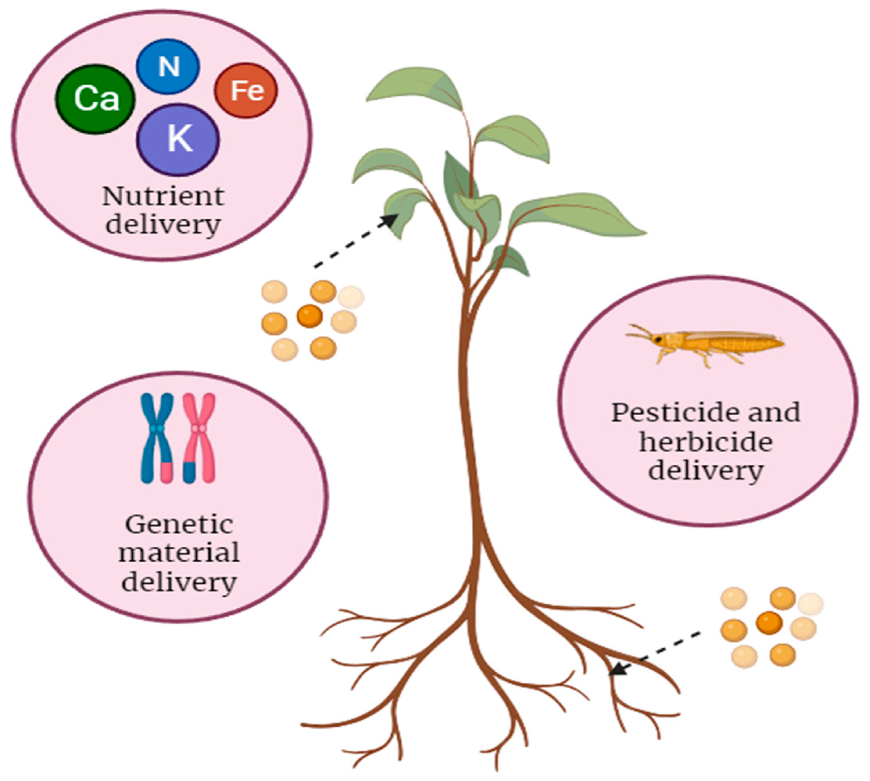
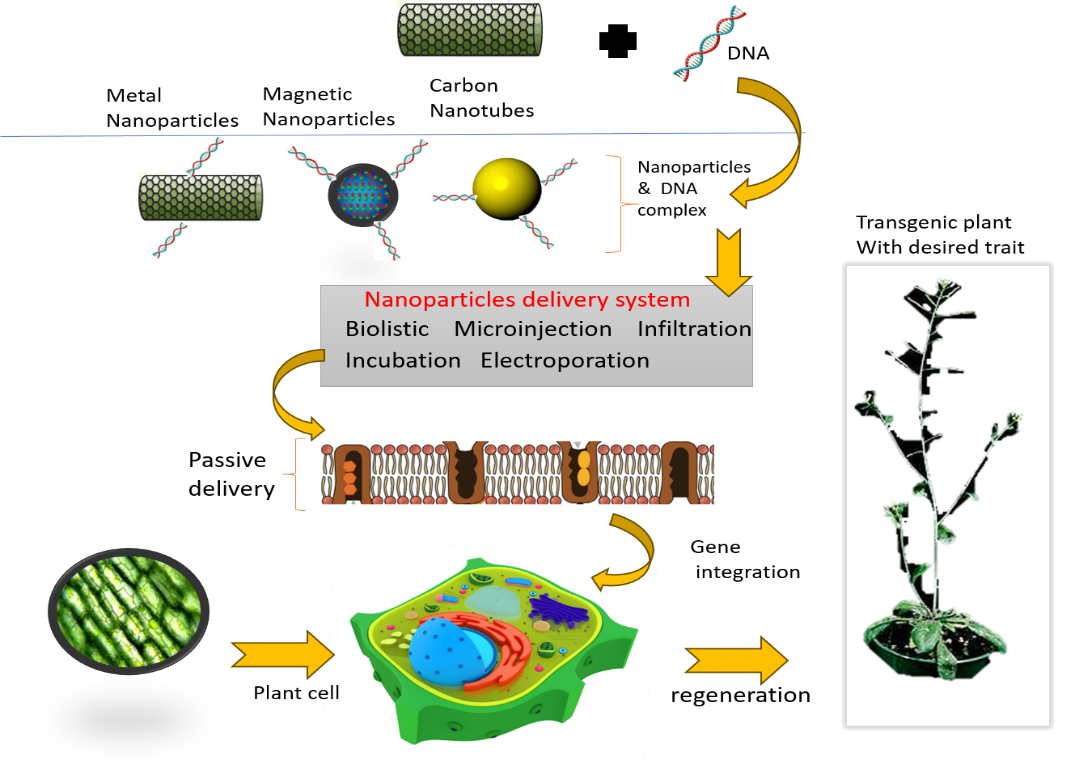
Different nanoparticles used in the genetic transformation of plants
Delivery Challenges
Several techniques including chemical treatment, electrical forces, nanoparticles, and others, have been tried to alter GMO in microbial and mammalian cells. The current methods are, however, limited in several ways and this is why nanoparticles present a more viable solution to the problem by improving cell wall penetration, adaptability to the type of payload, and efficiency of delivery across the plant kingdoms. Nanobiotechnology appears as an innovation of choice in genetic engineering since it offers a remedy to delivery concerns in myriad biological systems.
? Efficiency is more than Agrobacterium-mediated transformation and also the bombardment of particles
? Stable transformation and integration in plant genome
? Avoid random integration of transgene that may disrupt the endogenous plant genome
? The gene of interest will go to the target (Roberts et al.,2020)
There could be difficulty during the delivery of nano cargo complex in plant systems but seen success in microbial, Animal, and Mammalian cells because of basic variations in each system's biological barriers.
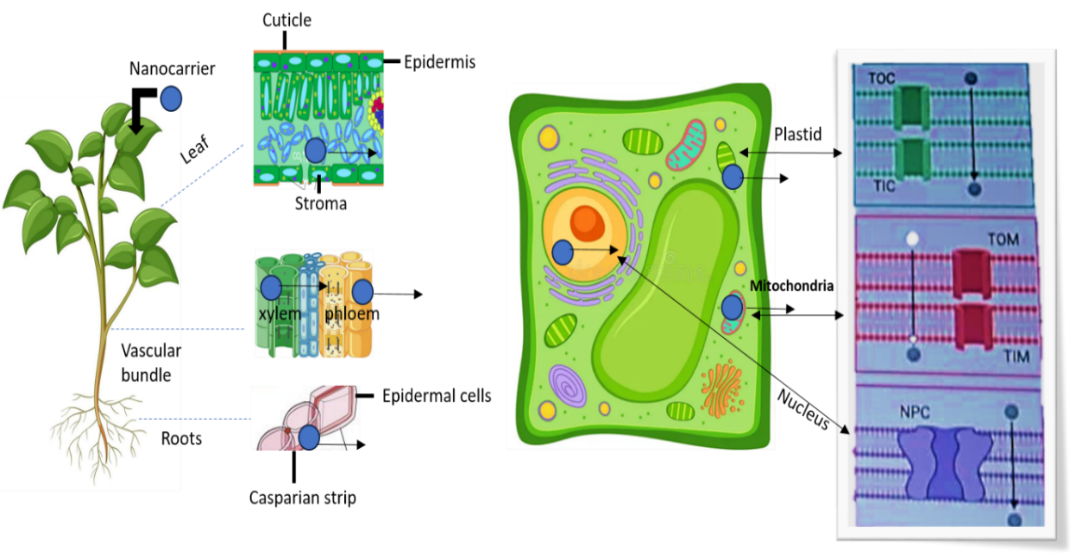
Applications of Nano Biotechnology Genetic Transformations
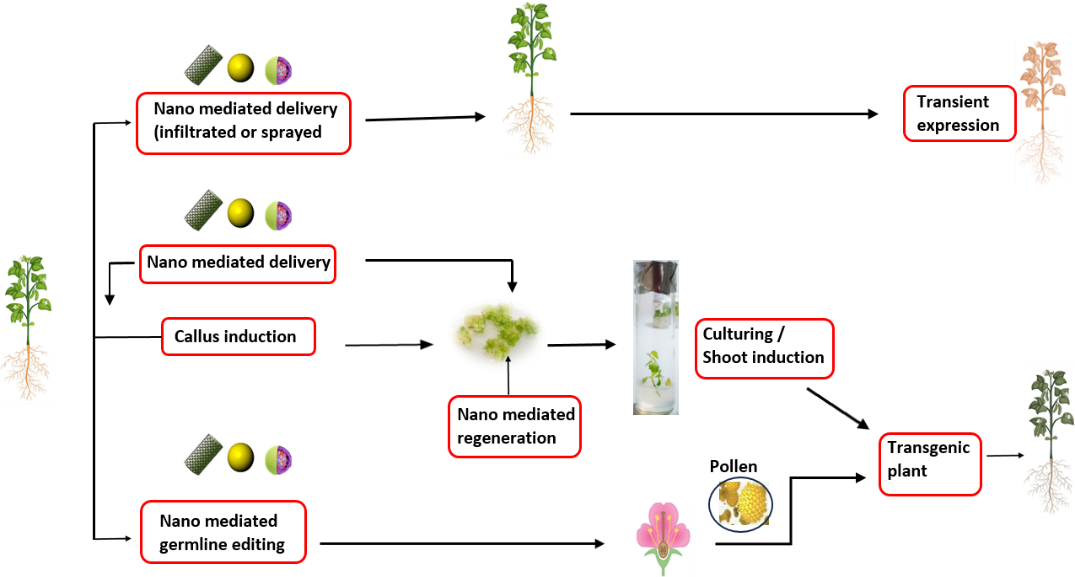
The use of NP-based transformation is a promising approach for tackling the limitations of traditional transformation methods, including limited species applicability and susceptibility to cell damage (Khannaet al., 2023) Numerous nanomaterials nanoparticles with metal nanoparticles, or mesoporous silica nanoparticles, among others, have been designated to transport nucleic acids in plant cells, despite the fact that hard cell wall is a significant obstacle to the biomolecules transfer in the plant cell (Yadavet al., 2023). Nanoparticles may target genetic material to inaccessible plant tissues, cells, and subcellular places, making this promising. According to recent research, plant meristematic areas allow editing in target tissues(Tandonet al., 2023). In addition nanoparticles cargos resistance against degradation. It not only delivers the plasmid DNA but can be used as a freight carrier in mature plants to deliver siRNA directly and silence genes (Zhang et al., 2020). To serve as a vehicle for the transport of siRNA, we created polyethyleneimine functioning gold particles (PEI-AuNPs) with fluorescence and the scavenging of ROS. Defense-regulated gene silencing using the PEI-AuNPs delivery method reduced bacterial population, balanced ROS concentration, increased antioxidant enzyme activity, and improved chlorophyll fluorescence performance, increasing the resilience of plants against disease. The opportunity plant nanobiotechnology in order to safeguard farming output and the advantages of AuNP-based RNA interference in enhancing plant disease resistance. (Wuet al., 2024). We report the encapsulation and delivery of dsRNA in cationic poly-aspartic acid-derived polymer (CPP6) into plant cells for physical characteristics and the immune system's reaction to bacterial infections (Palet al., 2024)(Sembada and Lenggoro, 2024). Nanotubes safeguard siRNA from nucleases and convey it into plant cells, accomplishing 98% quality hushing proficiency. This empowers RNA conveyance for plant biotechnology applications, with a critical potential for practical genomic studies and farming turn of events (Cai et al., 2023).In the table below you can see that the protein delivery is medicated by nanoparticles.
| Nanoparticles width="25%">Crops width="25%">Protein Cargo width="25%">References | > mesoporous silica nanoparticle (Au-MSN) width="25%">Onion and tobacco width="25%">Tobacco and onions as mesoporous silica nanoparticles (Au-MSN) Research is conducted on increased BSA and eGFP width="25%">(Martin?Ortigosa et al., 2012) | > MSNs that are gold-plated width="25%">maize (Zea mays) width="25%">re recombinase protein width="25%">(Martin-Ortigosa et al., 2013) | > Gold microparticles width="25%">Onion’s epidermis and leaves of tobacco width="25%">GFP, , BSA, GUS, , trypsin width="25%">(Martin-Ortigosa and Wang, 2014) | > TpI CPP complexes width="25%">Rape seed and wheat width="25%">Gus protein width="25%">(Chen et al.2015) |
| Nanoparticles width="17%">Crops width="22%">Cargo width="17%">Role width="21%">References | > Layered double hydroxide (LDH) clay nanosheets width="17%">N. benthamiana,>Tomato,Vigna mungo (L.), width="22%">dsRNA, microRNA,>siRNA> width="17%">A single spray of LDH-encapsulated dsRNA offers a 20-day virus defense; three amiRNAs target distinct TYLCV regions for transcript silencing. width="21%">Layered double hydroxide (LDH) clay nanosheets | > magnesium/iron-layered double hydroxides (MgFe-LDH) nanosheets width="17%">A few crops like soybean and sunflower width="22%">dsRNA width="17%">S. sclerotiorum lesion expansion was considerably slowed down by magnesium or iron labeled double hydroxide (MgFe-LDH) nanosheet filled with dsRNA segments that had been transcribed both. width="21%">magnesium/iron-layered double hydroxides (MgFe-LDH) nanosheets | > polymeric nanocarriers width="17%">Rice, Arabidopsis, and Tobacco width="22%">dsRNA width="17%">Physiological traits and defense against bacterial diseases width="21%">polymeric nanocarriers | > Fluorescent gold nanoparticles width="17%">Arabidopsis width="22%">siRNA width="17%">To provide plants siRNA to strengthen their resistance against Pseudomonas syringae. It enhanced the performance of chlorophyll fluorescence. width="21%">Fluorescent gold nanoparticles | > Carbon nanotube (CNT) width="17%">N. benthamiana>E. sativa>T. aestivum>Rice leaves and seeds width="22%">GFP,>Plasmid DNA delivery>CRISPR Cas- 9 width="17%">Plant scientists have modified to produce species-independent modified single-walled carbon nanotubes with surface chemistry designed for plasmid DNA transport.> width="21%">Carbon nanotube (CNT) | > (PSWNTs) width="17%">Tobacco width="22%">Vaccine delivery width="17%">Plant viral disease prevention width="21%">(PSWNTs) | > (DNA-CNTs), width="17%">(Spirodela polyrhiza) width="22%">DNA delivery width="17%">Duckweed potential as a powerhouse in synthetic biology width="21%">(DNA-CNTs), | > polyethyleneimine (PEI)--coated nanoparticles with carboxylated SNWTs width="17%">Litopenaeus vannamei (L.vannamei) width="22%">CRISPR-Cas9 delivery width="17%">Gene editing width="21%">polyethyleneimine (PEI)-coated nanoparticles with carboxylated SNWTs |
Different Nanoparticles in Plant Engineering Carbon Nanomaterials
The exceptional mechanical, electrical, optical, and thermal capabilities of engineered carbon nanostructures make them highly suitable for an extensive variety of uses. The main constituents of the carbon nanomaterial family are carbon nanotubes (CNTs), carbon dots (CDs), graphene oxide, and nanodiamonds (Zhang et al., 2016)(Zakaria et al., 2022). Carbon nanomaterials internalization was started in 2009(Liu et al., 2009). Because of its compact size and great tensile strength could be the better option for bypassing the cell wall. The effective transport of DNA in a range of plants, such as cotton, wheat, arugula, and N. benthamiana by CNTs. Lignin-Loaded Carbon Nanoparticles against Fusarium verticillioides in Maize(El-Ganainyet al., 2023).Carbon nanostructures in chloroplast(Santanaet al., 2022). Through electrostatic contact, functionalized carbon dots (CDs) are complicated with the screened dsRNAs (dsRNA-CDs) againstPhytophthora infestans andPhytophthora sojae. To the Enhancement of increased photosynthetic efficiency in plants through plastoquinone-mediated electron transfer using nitrogen-doped carbon dots (Jinget al., 2024). Nicotiana tabacum, Spinacia oleracea, Arabidopsis thaliana mesophyll protoplasts, mature plants of Eruca sativa and Nasturtium officinale, we exhibit chloroplast-targeted transgene transport and temporary expression. This delivery mechanism of the chloroplast transgene via nanoparticles offers several benefits over conventional delivery methods and might potential transformation method for plant bioengineering and biological investigations Mitochondria offers agronomic traits, but the delivery into mitochondrial genome less to low efficiencies, limiting in genetic engineering. CNTApproaches for the advancement of organelle biotechnology
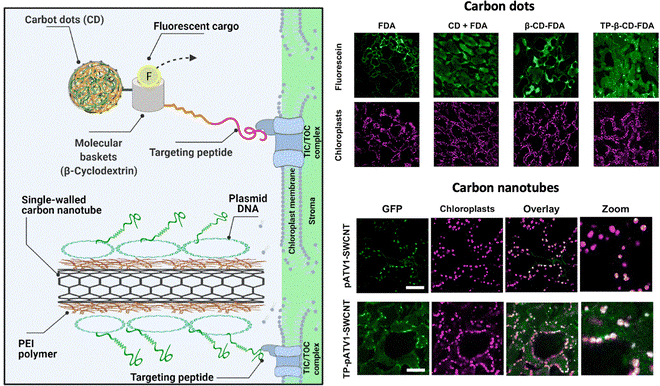
Fig.6. NM-mediated transport of chloroplasts by including a peptide specific to chloroplasts. In order to facilitate cargo delivery into the chloroplasts of A. thaliana leaves, It was possible to observe dye uptake in the chloroplasts by delivering a fluorescent dye via carbon dots in conjunction with a biorecognition motif specific to the TIC/TOC complex and a molecular basket. This was also applied to PEI-attached CNTs that shared a similar biorecognition motif and had been attached to a peptide containing a DNA binding domain. after being complexed with pDNA. After seven days of exposure, the reporter GFP construct was seen to be expressed. There is a 50 ?m scale bar. Permission to use this adaptation is provided by the American Chemical Society (Santana et al., 2022).
Metallic Nanoparticles
Large-scale and small-scale metallic delivery methods have been extensively used for transporting genetic material within the systems of animals, with gold nanoparticles. It is the most extensively studied for delivering biomolecules. For many years, tiny gold particles have been used in plants to carry molecules via a process called biolistic delivery(Duanet al., 2021). In order to transfect such siRNA into the intact plants of Aloë Vera, we functionalize polyethyleneimine gold nanoclusters as stated earlier and referred to as PEI-AuNCs. Such nanoclusters can, therefore, be considered to have gene knockdown since a phenomenon as such can be clearly proven with the help of such. Additionally, we also prove that due to its size, it cannot penetrate into the PEI-AuNC; thereby, confirming that siRNA has better protection against RNase degradation as compared to a plant cell. In this study, we used AuNPs in conjunction with AmiRNA technology to target specific genes in plants. Fluorescent gold nanoparticles deliver siRNA against Pseudomonas syringae (Wu et al., 2024)(Khanet al., 2024), and also a role as a nanophytovirology to detect plant viruses(Warghaneet al., 2024). AuNPs-siRNANPR1 silenced 80% of the NPR1 gene in Arabidopsis(Lei et al., 2020). The highest efficacy of transformation was documented in Lilium regale pollen by using nanomagnetic beads to DNA plasmid (Zhang et al., 2023). By Pollen magnetofection, transgenic seed production without regeneration. Existing maize gene delivery strategies were time-consuming. Thus, we present an updated by using nanoparticles with magnetic properties (MNPs) coated with DNA expressing bialaphos resistance (bar), improved green fluorescent protein (EGFP), ?-glucuronidase gene, or red fluorescent protein (RFP) (Wang et al., 2022). See Fig 6 for how pollen magnetic nanoparticles are carried out
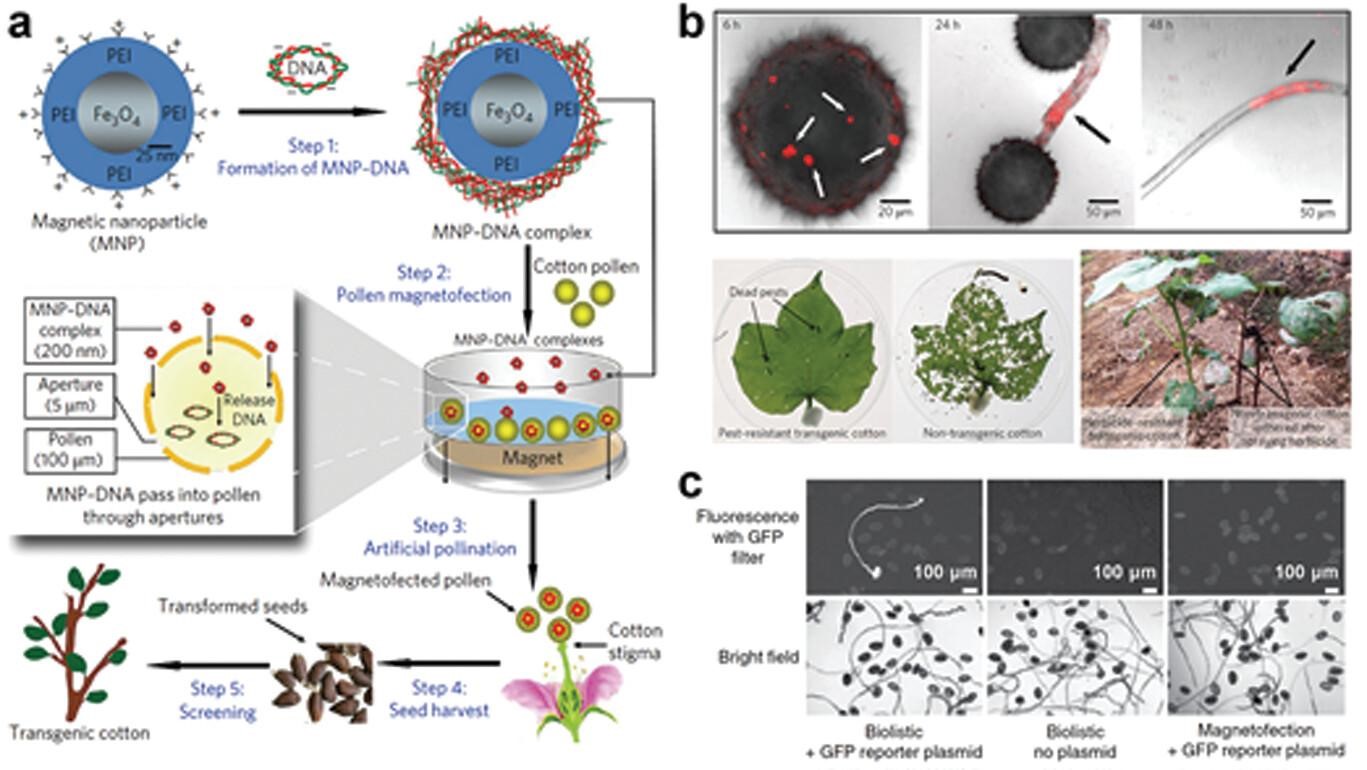
Five Steps Includes in Pollen Magnetofection
Fig.7. 1) MNP-DNA complex creation; 2) pollen magnetofection using cotton pollen; 3) artificial pollination using magnetofected pollen grains; 4) harvesting of seeds; and 5) screening of transgenic plants. A,b) Reproduced with permission from Zhao et al. (2017). B) Temporal monitoring of fluorescent MNPs labeled with Lumogen F Red 305 in the pollen grains and tubes within 48 hours. Used by permission (Vejlupkova et al., 2020) Copyright 2017, Springer Nature
Silicon NPS
Numerous reports on silicon-based delivery methods in animal systems. The Am-MSNs/pDNA compound demonstrated strong stability and effectively shielded confined pDNA from cellular nucleases’ destruction. No cytotoxic effects on A. thaliana protoplasts. Much more transformation efficiency was made possible by the Am-MSN-50 (LU et al., 2022). The MPI promoter-controlled functionalized MSNs with the appropriate particle size and cryIAb gene delivery into the tomato plants and the putative transgenic seeds were collected. Due to its biodegradability, and biocompatibility, prefer over conventional methods(Junejaet al., 2021). Also act as against Fusarium graminearum (Kaziemet al., 2022)
Genome Editing Applications of Nanoparticles
Crispr-cas9 is an advanced technology for genetic engineering because it enables targeted alteration in the genome of an organism. Nanomaterials improve gene editing, which has been considered a difficult technique using conventional techniques. They have targeted endonucleases namely Meganucleases with recognition sequences of 20–30 kb (Tröder and Zevnik, 2021; Li et al., 2024) and Zinc-finger nucleases (ZFNs), which has revolutionized genetic modification (Sufyan et al., 2023). The novel Fanzor technique also develops genome editing even further (Writer, 2023).
In order to effectively employ nanoparticles in plant bioengineering, steady change in genes and expression to allow producing productive transgenic plants. When CNTs are used for delivery, CRISPR plasmids will express themselves momentarily to help prevent the negative effects of repeated copy insertions. BsTargeted tissue genome editing using nanoparticles random integration allows for the transgene-free engineering of crops grown vegetatively and can create permanent edits in the plant genome (Wang et al., 2019). Rice seed and embryos using CNT-delivered CRISPR-Cas for gene editing SWCNTs are thought to be promising delivery systems for the CRISPR-Cas9 genome editing tool into plant cells (Aliet al., 2022). CRISPR-Cas9 delivery nanoparticles Gold nanoparticles, DNA nanostructures, polymer-based nanoparticles, lipid-based nanoparticles, and so forth (Duan et al., 2021). The production of aromatic rice for specific Rice Gene Editing Through Pollen Magnetofection Assisted by Magnetic Nanoparticles (Shen et al., 2023). Exosome/Liposome, A DNA “nanoclew” Cationic Lipid Nanoparticles Hybrid Delivery of CRISPR/Cas Reagents (Alghuthaymiet al., 2021).
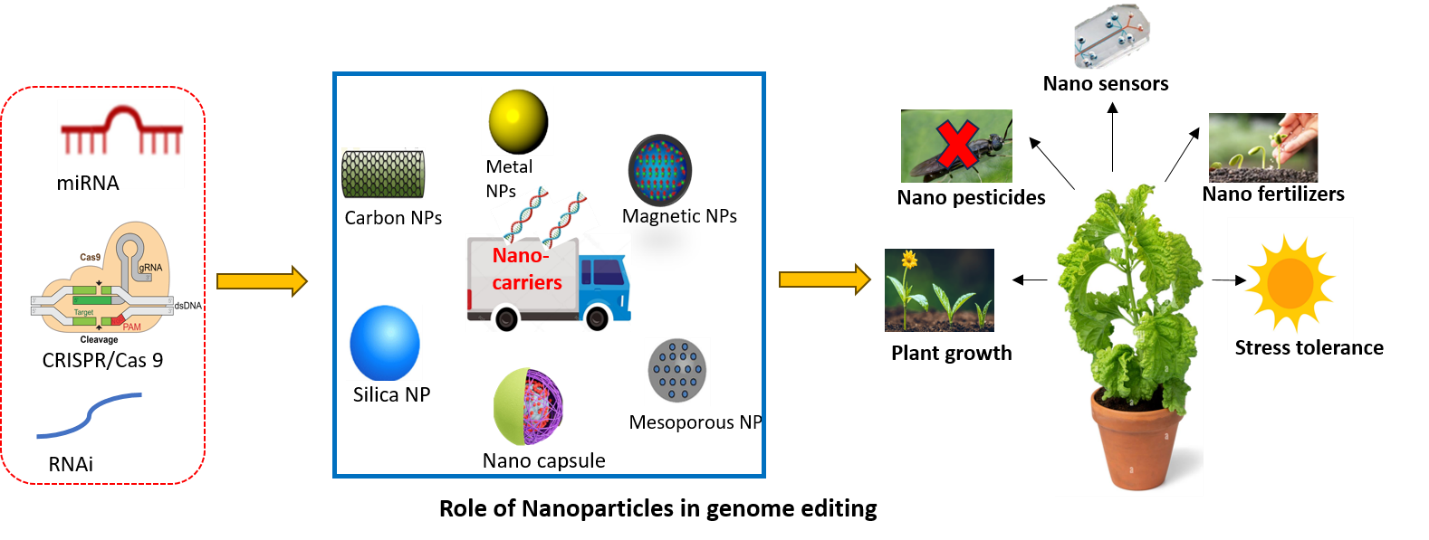
Role of Nanoparticles in genome editing
| Editing width="17%">Target genes width="50%">Nanoparticles width="16%">References | > Knockout width="17%">BAFFR width="50%">Polyethyleneimine–cyclodextrin width="16%">(Li et al., 2018) | > Knockout width="17%">Polo-like kinase 1 (PLK-1) width="50%">Catalic lipid nanoparticles modified with phospholipid and polyethylene glycol (PLNP)-based delivery systems width="16%">(Zhang et al., 2017) | > Knockout width="17%">To knock out PD-L1 width="50%">Stearyl polyethyleneimine complexed with plasmids as the core of human serum albumin nanoparticles width="16%"> | > Homology-directed repair width="17%">CXCR4 width="50%">Cas9 ribonucleoprotein can be delivered using a delivery vehicle made of gold nanoparticles attached to DNA and complex with cationic endosomal disrupting polymers. width="16%"> | > Knockout width="17%">GFP width="50%">DNA nano clew width="16%">(Wang et al., 2016) | > Knockout width="17%">CD38 width="50%">Nanoscale zeolitic imidazole frameworks (ZIFs) width="16%"> | > K456>nockout width="17%">GFP width="50%">Gold?Nanoparticle?Mediated Laserporation width="16%"> | > Knockout width="17%">H11 width="50%">Self-Assembled DNA Nanoclews width="16%"> |
Challenges for Nanoparticle Application for Genome Editing in Plant Species
No doubt Nano-biotechnology has potential however, caution must be used when handling nanoparticles size.
? The dosage of these nanoparticles has also been identified as an important criterion for gene transfer due to issues of reactivity and stability.
? A low dosage might hamper the functionalization and poor cargo carriage while a high dosage poses danger to the cells by inducing oxidative stress.
? Information concerning the biosafety of nanoparticles is important, for instance, the effects or toxicity side effects.
| Nanoparticles width="20%">Delivery method width="22%">Crop and dose width="23%">Role width="15%">References | > ZnO-NPs width="20%">foliar spray width="22%">.5, 1 and 5g L?1 fortnight gap on rice crop width="23%">Foliar spray of ZnONPs enhanced plant growth, yield traits, zinc content, and soil microbial activity, and exhibited antibacterial effects against rice blight pathogen.> width="15%"> | > Cerium oxide nanoparticles width="20%">By soil width="22%">(25 nm and 50 nm) width="23%">Three species of spontaneous plants were observed in a germination experiment >and a pot soil investigation to see how they responded to varying concentrations of nCeO2 with varying dimensions. In the early phases of plant development, CeO2 treatments promote root elongation and raise the percentage of germination.> width="15%"> | > Silver nanoparticles (AgNPs) width="20%">By foliar applications width="22%">(20, 40, 80 and 100?ppm) width="23%">Silver nanoparticles (AgNPs) inhibited 75.93% of B. fabae, effectively increasing growth and yield while protecting faba beans from chocolate spot disease.> width="15%"> | > chitosan-based nanoparticles width="20%">By spray mediated width="22%">concentrations of nanoparticles (CS, CSAg, and CSCu)>1, 10 and 20ppm width="23%">Capsicum spp. leaves enhanced physiological traits, increased chlorophyll (20–75%) and carotenoids, boosted secondary metabolites, and provided 70–85% protection against thrips.> width="15%"> | > TiO2 NPs width="20%">Treatment in lab width="22%">(15 mg L?1). width="23%">TiO2 nanoparticle on cytological, physiological, and expression of genes alterations.> width="15%">(Ghouri et al., 2024) | > Carbon nanomaterials width="20%">By soil width="22%">1000?mg/kg and exposure time limited to 50–100?days width="23%">MWCNTs enhance soil microbial diversity and promote crop growth, showing promise for increased agricultural output.t.> width="15%"> | > FA and ZnO NPs (FZ-50) width="20%">Soil width="22%">indicated as 20% FZ, 50% FZ, and 80% FZ with mass proportions of 1:5, 1:2, and 4:5. width="23%">ZnONPs elevated soil and mung bean zinc levels boosting production, and nitrogen-fixing ability without inducing oxidative stress harm.> width="15%">(Guo et al., 2024) | > Carbon-based NMs width="20%">Spray width="22%">200 mg L?1 width="23%">200 mg L?1 carbon-based NMs protect against TMV, enhancing photosynthetic efficiency and inducing defense responses.> width="15%">(Adeel et al., 2021) | > Nanoparticles of Zinc Oxide width="20%">Foliar sprays width="22%">ZnO-NPs at 50 mg/L (ZnO-NPs1) and 100 mg/L (ZnO-NPs2)> width="23%">ZnO-NPs were tested for their effects on the antioxidant defense mechanism activity and tomato development indices under ToMV stress.> width="15%"> | > chitosan–gu> >m acacia (CSGA) polymers to form nanocomposite (NC) CSGA-M> width="20%">width="22%"> Nano CSGA-M-1.0 at 1.5 ppm (which includes 1.0 mg/mL mancozeb)> width="23%">Control of Solanum tuberosum L. Early Blight and Stem Rot by Mancozeb-Loaded Chitosan-Gum Acacia Nanocomposites> width="15%"> |
| Nanoparticles width="53%">Delivery method/Role width="25%">References | > Mesoporous silica NPs width="53%">By Foliar spray and genome editing width="25%"> | > Silicon nanoparticles width="53%">§ Against pests and pathogens, is an option,>§ Detoxification of heavy metals, antifungal activity width="25%">(Naiduet al., 2023)(Ulhassanet al., 2023)(Nabilet al., 2024) | > Nanoselenium and nanosilicon width="53%">Nutrition and disease protection of crop species width="25%">(Sohrawardyet al., 2022) | > Loaded Azoxystrobin and Pectin Nanoparticles of Fe3O4 width="53%">§ Increase Resistance of Rice to Sheath Blight,>§ In order to look into how Fe3O4 nanoparticles (Fe-NPs) affect sunflower seed germination width="25%">(Menget al., 2024)(Kornarzy?skiet al., 2020) | > Multi-walled carbon nanotube width="53%">§ Alleviating the adverse effects of environmental stresses on plants,>§ Shows positive progression in the bio-fabrication of L-Dopa in Hybanthus enneaspermus suspension cells width="25%">(Krá?ová and Jampílek, 2023)(Rahmani and Radjabian, 2024)( 2023)(Parthasarathy et al., 2024) | > Metal oxide- nanoparticles width="53%">To determine the properties of soil width="25%"> | > Chitosan nanoparticle width="53%">§ - Chitosan nanoparticles foliar application sped up finger millet growth, activating defense enzymes.>§ - Enhance wheat yield during drought stress.>§ - Improve grape plant yield under salinity stress. width="25%"> | > Liposome NPs width="53%">>§ Assist in improving the uptake and distribution of active substances to boost autumn barley’s resilience, vitality, and yield (Hordeum vulgare), width="25%"> |
References
-
Adachi, K., Hirose, A., Kanazashi, Y., Hibara, M., Hirata, T., Mikami, M., Endo, M., Hirose, S., Maruyama, N., Ishimoto, M., Abe, J., & Yamada, T. (2021). Site-directed mutage
-
Alekseeva, I. V., & Kuznetsov, N. A. (2023). Historical aspects of restriction endonucleases as intelligent scissors for genetic engineering. Fermentation, 9(10)
-
Alghuthaymi, M. A., Ahmad, A., Khan, Z., Khan, S. H., Ahmed, F. K., Faiz, S., Nepovimova, E., Kuča, K., & Abd-Elsalam, K. A. (2021). Exosome/Liposome-like nanoparticles: new carriers for CRISPR genome editing in plants. I
-
Ali, Z., Serag, M. F., Demirer, G. S., Torre, B., Di Fabrizio, E., Landry, M. P., Habuchi, S., & Mahfouz, M. (2022). DNA–Carbon nanotube binding mode determines the efficiency
-
Alsaiari, S. K., Patil, S., Alyami, M., Alamoudi, K. O., Aleisa, F. A., Merzaban, J. S., Li, M., & Khashab, N. M. (2017). Endosomal escape and delivery of CRISPR/CAS9 genome editing machinery enabled by Nanoscale Zeolitic Im
-
Azizi-Dargahlou, S., & Pouresmaeil, M. (2023). Agrobacterium tumefaciens-Mediated Plant Transformation: A review. Molecular Biotechnology.
-
Bala, R., Kalia, A., & Dhaliwal, S. S. (2019). Evaluation of efficacy of ZNO nanoparticles as remedial zinc nanofertilizer for rice. Journal of Soil Science and Plant Nutri
-
Bayda, S., Adeel, M., Tuccinardi, T., Cordani, M., & Rizzolio, F. (2019). The history of Nanoscience and Nanotechnology: From Chemical–Physical applications to Nanomedicine.
-
Behl, K., Jaiswal, P., & Pabbi, S. (2024). Recent advances in Microbial and Nano-Formulations for effective delivery and agriculture sustainability. Biocatalysis and Agricultural Biotechnology, 103180.
-
Bora, S., Pooja, D., & Kulhari, H. (2024). Introduction of nanoscience and nanotechnology. In Nanotechnology based delivery of phytoconstituents and cosmeceuticals (pp. 1–38). Springer.
-
Bošnjak, B., Permanyer, M., Sethi, M. K., Galla, M., Maetzig, T., Heinemann, D., Willenzon, S., Förster, R., Heisterkamp, A., & Kalies, S. (2018). CRISPR/CAS9 genome editing u
-
Brown, T. A. (2020). Gene cloning and DNA analysis: An Introduction. John Wiley & Sons.
-
Cai, Y., Liu, Z., Wang, H., Meng, H., & Cao, Y. (2023). Mesoporous silica nanoparticles mediate SiRNA delivery for Long‐Term Multi‐Gene silencing in intact plants. Advanced Science, 11(9).
-
Cheng, W. J., Chen, L. C., Ho, H. O., Lin, H. L., & Sheu, M. T. (2018). Stearyl polyethylenimine complexed with plasmids as the core of human serum albumin nanoparticles nonco
-
Cunningham, F. J. (2022). Conjugating CRISPR-Cas9 machinery to single-walled carbon nanotubes for plant cellular delivery (Doctoral dissertation, University of California, Berkeley).
-
Cunningham, F. J., Goh, N. S., Demirer, G. S., Matos, J. L., & Landry, M. P. (2018). Nanoparticle-Mediated Delivery towards Advancing Plant Genetic Engineering. Trends in B
-
Deng, Q., Huang, S., Liu, H., Lu, Q., Du, P., Li, H., Li, S., Liu, H., Wang, R., Huang, L., Sun, D., Wu, Y., Chen, X., & Hong, Y. (2024). Silica nanoparticles conferring resistance to bacterial wilt in peanut (Arachis hypoga
-
Duan, L., Ouyang, K., Xu, X., Xu, L., Wen, C., Zhou, X., Qin, Z., Xu, Z., Sun, W., & Liang, Y. (2021). Nanoparticle delivery of CRISPR/CAS9 for genome editing. Frontiers in
-
Duan, W., Hao, Z., Pang, H., Peng, Y., Xu, Y., Zhang, Y., Zhang, Y., Kang, Z., & Zhao, J. (2023). Novel stripe rust effector boosts the transcription of a host susceptibility
-
El-Fawy, M. M., Ahmed, S. A., Korrat, R. a. A., Abo-Elyousr, K. a. M., Mousa, M. a. A., Ibrahim, O. H. M., & Saeed, A. S. (2024). Effectiveness of Epicoccum nigrum and Silver
-
El-Ganainy, S. M., Mosa, M. A., Ismail, A. M., & Khalil, A. E. (2023). Lignin-Loaded Carbon Nanoparticles as a Promising Control Agent against Fusarium verticillioides in Maiz
-
El-Shetehy, M., Moradi, A., Maceroni, M., Reihnardt, D., Petri-Fink, A., Rothen-Rutishauser, B., Mauch, F., & Schwab, F. (2020). Silica nanoparticles enhance disease resistanc
-
Fashola, M. O., Obayori, O. S., Adebiyi, K. O., Abiona, O. O., Opere, B. O., & Bello, O. O. (2021). Application of Nanobiotechnology in Agri-Food sector: A promising technique
-
Fizree, M. P. M. a. A., Masani, M. Y. A., Shaharuddin, N. A., Chai-Ling, H., Manaf, M. a. A., & Parveez, G. K. A. (2023). Efficient PEG-mediated transformation of oil palm mesophyll protoplasts and its application in functio
-
Gad, M. A., Li, M., Ahmed, F. K., & Almoammar, H. (2020). Nanomaterials for gene delivery and editing in plants: Challenges and future perspective. In Elsevier eBooks (
-
Gao, C., & Nielsen, K. K. (2012). Comparison between Agrobacterium-Mediated and Direct Gene Transfer using the gene Gun. In Methods in molecular biology (pp. 3–16).
-
Gull, I., & Jander, G. (2023). Inoculation of Maize with Sugarcane Mosaic Virus Constructs and Application for RNA Interference in Fall Armyworms. Bio-protocol, 13
-
Hassan, N., & Siddiqui, F. (2024). Merging nanotechnology and biotechnology: Transforming plant sciences with nanobiotechnological innovations. International Journal of Applied Machine Learning and Computationa
-
Hegedűs, G., Kutasy, B., Kiniczky, M., Decsi, K., Juhász, Á., Nagy, Á., Pallos, J. P., & Virág, E. (2022). Liposomal Formulation of Botanical Extracts May Enhance Yield Trigge
-
Hernandez, E. S. (2021). Layered double hydroxide (LDH)-mediated topical delivery of dsRNA for protection against Tomato yellow leaf curl virus (TYLCV) in Nicotiana benthamiana
-
Hulla, J., Sahu, S., & Hayes, A. (2015). Nanotechnology. Human & Experimental Toxicology, 34(12), 1318–1321.
-
Islam, T., Kalkar, S., Tinker-Kulberg, R., Ignatova, T., & Josephs, E. A. (2023). The “Duckweed Dip”: Aquatic Spirodela polyrhiza Plants Can Efficiently Uptake Dissolved, DNA-
-
Jaithon, T., Atichakaro, T., Phonphoem, W., T-Thienprasert, J., Sreewongchai, T., & T-Thienprasert, N. P. (2024). Potential usage of biosynthesized zinc oxide nanoparticles from mangosteen peel ethanol extract to inhibit Xan
-
Jing, X., Liu, Y., Liu, X., Zhang, Y., Wang, G., Yang, F., Zhang, Y., Chang, D., Zhang, Z., You, C., Zhang, S., & Wang, X. (2024). Enhanced photosynthetic efficiency by nitrog
-
Johnson-McDaniel, D., Barrett, C. A., Sharafi, A., & Salguero, T. T. (2013). Nanoscience of an ancient pigment. Journal of the American Chemical Society, 135(5),
-
Johnson, K., Chu, U. C., Anthony, G., Wu, E., Che, P., & Jones, T. J. (2023). Rapid and highly efficient morphogenic gene-mediated hexaploid wheat transformation. Frontiers in Plant Science, 14.
-
Juneja, R., Vadarevu, H., Halman, J., Tarannum, M., Rackley, L., Dobbs, J., Marquez, J., Chandler, M., Afonin, K., & Vivero-Escoto, J. L. (2020). Combination of nucleic acid and mesoporous silica nanoparticles: optimization
-
Kaziem, A. E., Yang, L., Lin, Y., Xu, H., & Zhang, Z. (2022). Β-Glucan-Functionalized mesoporous silica nanoparticles for smart control of fungicide release and translocation
-
Khan, S., Khan, R. S., Khalid, A., Gul, M., Brekhna, N., Wadood, A., Zahoor, M., & Ullah, R. (2024). Biomedical and agricultural applications of gold nanoparticles (AuNPs): a
-
Khanna, K., Ohri, P., & Bhardwaj, R. (2023). Nanotechnology and CRISPR/Cas9 system for sustainable agriculture. Environmental Science and Pollution Research International
-
Kornarzyński, K., Sujak, A., Czernel, G., & Wiącek, D. (2020). Effect of Fe3O4 nanoparticles on germination of seeds and concentration of elements in Helianthus annuus L. unde
-
Kráľová, K., & Jampílek, J. (2023). Effects of nanoparticles/nanotubes on plant growth. In Elsevier eBooks (pp. 183–237).
-
Kumar, R., Duhan, J. S., Manuja, A., Kaur, P., Kumar, B., & Sadh, P. K. (2022). Toxicity Assessment and Control of Early Blight and Stem Rot of Solanum tuberosum L. by Mancoze
-
Kuzmanović, N., Wolf, J., Will, S. E., Smalla, K., diCenzo, G. C., & Neumann-Schaal, M. (2023). Diversity and Evolutionary History of Ti Plasmids of “tumorigenes” Clade of Rhi
-
Lee, K., Conboy, M., Park, H. M., Jiang, F., Kim, H. J., Dewitt, M. A., Mackley, V. A., Chang, K., Rao, A., Skinner, C., Shobha, T., Mehdipour, M., Liu, H., Huang, W., Lan, F., Br
-
Liu, Q., Chen, B., Wang, Q., Shi, X., Xiao, Z., Lin, J., & Fang, X. (2009). Carbon nanotubes as molecular transporters for walled plant cells. Nano Letters, 9(3)
-
Liu, S., Su, C., Zhang, D., Song, Z., Wang, X., Wang, J., & Yuan, X. (2023). Construction of a Delivery Platform for Vaccine Based on Modified Nanotubes: Sustainable Prevention against Plant Viral Disease, Simplified Prepara
-
Lizzi, D. (2020). Cerium oxide nanoparticles influence the life cycle of spontaneous plant species. .
-
Lv, Z., Jiang, R., Chen, J., & Chen, W. (2020). Nanoparticle‐mediated gene transformation strategies for plant genetic engineering. Plant Journal, 104(4), 880–89
-
Martin-Ortigosa, S., Peterson, D. J., Valenstein, J. S., Lin, V. S., Trewyn, B. G., Lyznik, L. A., & Wang, K. (2013). Mesoporous silica Nanoparticle-Mediated Intracellular CRE
-
Martin-Ortigosa, S., & Wang, K. (2014). Proteolistics: a biolistic method for intracellular delivery of proteins. Transgenic Research, 23(5), 743–756.
-
Martin‐Ortigosa, S., Valenstein, J. S., Lin, V. S., Trewyn, B. G., & Wang, K. (2012). Gold functionalized mesoporous silica nanoparticle mediated protein and DNA codelivery to
-
Mawale, K. S., & Giridhar, P. (2024). Chitosan nanoparticles modulate plant growth, and yield, as well as thrips infestation in Capsicum spp. International Journal of Biological Macromolecules, 254, 127682.
-
Men, J. L., Zhang, Y. T., Pei, Y. B., Li, N., Xiang, J. H., & Zhou, H. L. (2024). Development of a PEI-coated SWNTs Nanocarrier for efficient delivery of CRISPR/Cas9 in early
-
Meng, Z., Wu, Q., Wu, X., Yang, C., Xu, W., Lin, T., Liang, Y., & Chen, X. (2024). Nanoparticles of Fe3O4 Loaded with Azoxystrobin and Pectin to Enhance Resistance of Rice to
-
Mishra, D., Chitara, M. K., Upadhayay, V. K., Singh, J. P., & Chaturvedi, P. (2023). Plant growth promoting potential of urea doped calcium phosphate nanoparticles in finger millet (Eleusine coracana (L.) Gaertn.) under drou
-
Mitter, N., Worrall, E. A., Robinson, K. E., Li, P., Jain, R. G., Taochy, C., Fletcher, S. J., Carroll, B. J., Lu, G. Q., & Xu, Z. P. (2017). Clay nanosheets for topical deliv
-
Modena, M. M., Rühle, B., Burg, T. P., & Wuttke, S. (2019). Nanoparticle characterization: what to measure? Advanced Materials, 31(32).
-
Mohamed, M. A., Mohamed, A. E. A., & Abd-Elsalam, K. A. (2019). Magnetic nanoparticles in plant protection: promises and risks. In Nanotechnology in the life sciences (
-
Marzano, S. L., Beligala, G., Mukherjee, S., & Feng, C. (2023). Double-stranded RNA targeting white mold Sclerotinia sclerotiorum argonaute 2 for disease control via spray-ind
-
Nabil, M., Elnouby, M., Al-Askar, A. A., Kowalczewski, P. Ł., Abdelkhalek, A., & Behiry, S. I. (2024). Porous silicon nanostructures: Synthesis, characterization, and their an
-
Naidu, S., Pandey, J., Mishra, L. C., Chakraborty, A., Roy, A., Singh, I. K., & Singh, A. (2023). Silicon nanoparticles: Synthesis, uptake and their role in mitigation of biot
-
Pal, G., Ingole, K. D., Yavvari, P. S., Verma, P., Kumari, A., Chauhan, C., Chaudhary, D., Srivastava, A., Bajaj, A., & Vemanna, R. S. (2024). Exogenous application of nanocarrier‐mediated double‐stranded RNA manipulates phy
-
Parthasarathy, S. P., Anusuya, S., Rajalakshmi, S., Megha, D., Appunu, C., Alagumanian, S., & Manickavasagam, M. (2024). Elucidating the efficacy of functionalized multi-walle
-
Peng, C., Tong, H., Shen, C., Sun, L., Yuan, P., He, M., & Shi, J. (2020). Bioavailability and translocation of metal oxide nanoparticles in the soil-rice plant system. Sci
-
Pisano, R., & Durlo, A. (2023). Feynman’s Frameworks on Nanotechnology in Historiographical Debate. In Historiographies of science (pp. 1–38).
-
Rahmani, N., & Radjabian, T. (2024). Integrative effects of phytohormones in the phenolic acids production in Salvia verticillata L. under multi-walled carbon nanotubes and methyl jasmonate elicitation. BMC Plant Biology
-
Rind, I. K., Tuzen, M., Sarı, A., Lanjwani, M. F., Memon, N., & Saleh, T. A. (2023). Synthesis of TiO2 nanoparticles loaded on magnetite nanoparticles modified kaolinite clay
-
Roberts, T. C., Langer, R., & Wood, M. J. A. (2020). Advances in oligonucleotide drug delivery. Nature Reviews. Drug Discover/Nature Reviews. Drug Discovery, 19(10), 673–694.
-
Sajid, M., & Płotka-Wasylka, J. (2020). Nanoparticles: Synthesis, characteristics, and applications in analytical and other sciences. Microchemical Journal, 154,
-
Saleh, T. A. (2020). Nanomaterials: Classification, properties, and environmental toxicities. Environmental Technology & Innovation, 20, 101067.
-
Santana, I., Jeon, S., Kim, H., Islam, M. R., Castillo, C., Garcia, G. F. H., Newkirk, G. M., & Giraldo, J. P. (2022). Targeted carbon nanostructures for chemical and gene del
-
Shaheen, I., Khalil, A., Shaheen, R., & Tahir, M. B. (2023). A review on nanomaterials: types, synthesis, characterization techniques, properties and applications. Innovati
-
Shen, R., Peng, Z., Zhao, L., Chen, C., Wang, H., Chen, Z., Wang, J., & Guo, T. (2023). Creation of Fragrant Rice by Targeted Editing of fgr Gene Using Magnetic Nanoparticle-mediated Pollen Magnetofection in Rice. Researc
-
Sofy, A. R., Sofy, M. R., Hmed, A. A., Dawoud, R. A., Alnaggar, A. E. M., Soliman, A. M., & El-Dougdoug, N. K. (2021). Ameliorating the Adverse Effects of Tomato mosaic tobamo
-
Paul, S. K., Sohrawardy, H., Mahmud, N. U., Roy, P. C., & Islam, T. (2022). Nanopesticides for crop protection. In Elsevier eBooks (pp. 389–438).
-
Stepchenkova, E. I., Zadorsky, S. P., Shumega, A. R., & Aksenova, A. Y. (2023). Practical Approaches for the Yeast Saccharomyces cerevisiae Genome Modification. Internation
-
Suazo-Hernández, J., Arancibia-Miranda, N., Mlih, R., Cáceres-Jensen, L., Bolan, N., & De La Luz Mora, M. (2023). Impact on some soil physical and chemical properties caused b
-
Sufyan, M., Daraz, U., Hyder, S., Zulfiqar, U., Iqbal, R., Eldin, S. M., Rafiq, F., Mahmood, N., Shahzad, K., Uzair, M., Fiaz, S., & Ali, I. (2023). An overview of genome engi
-
Sun, W., Ji, W., Hall, J. M., Hu, Q., Wang, C., Beisel, C. L., & Gu, Z. (2015). Self‐Assembled DNA nanoclews for the efficient delivery of CRISPR–CAS9 for genome editing. A
-
Tandon, A., Singh, A., Thakur, A., & Sharma, V. (2023). Nanomaterial mediated genome engineering for sustainable food production: Current stat
-
Tröder, S. E., & Zevnik, B. (2021). History of genome editing: From meganucleases to CRISPR. Laboratory Animals, 56(1), 60–68.
-
Ulhassan, Z., Yang, S., He, D., Khan, A. R., Salam, A., Azhar, W., Muhammad, S., Ali, S., Hamid, Y., Khan, I., Sheteiwy, M. S., & Zhou, W. (20
-
Walter, P., Welcomme, E., Hallégot, P., Zaluzec, N. J., Deeb, C., Castaing, J., Veyssière, P., Bréniaux, R., Lévêque, J., & Tsoucaris, G. (2006). Early use of PBS nanotechnology for an ancient
-
Wang, J. W., Grandio, E. G., Newkirk, G. M., Demirer, G. S., Butrus, S., Giraldo, J. P., & Landry, M. P. (2019). Nanoparticle-Mediated Genetic
-
Wang, Z., Zhang, Z., Zheng, D., Zhang, T., Li, X., Zhang, C., Yu, R., Wei, J., & Wu, Z. (2022). Efficient and genotype independent maize trans
-
Warghane, A., Saini, R., Shri, M., Andankar, I., Ghosh, D. K., & Chopade, B. A. (2024). Application of nanoparticles for management of plant viral pathogen: Current status and future prospects
-
Wu, H., Qi, J., Li, Y., Xue, Y., Li, G., Xu, W., Xie, Z., Gu, J., & Li, Z. (2024). Rational design of ROS scavenging and fluorescent gold nano
-
Yadav, S., Jat, S. K., Bhattacharya, J., & Sharma, M. K. (2023). Nanotechnology mediated gene transfer in plants: a novel approach. In Elsevier eBooks (pp. 141–168).
-
Zakaria, N. Z. J., Rozali, S., Mubarak, N. M., & Ibrahim, S. (2022). A review of the recent trend in the synthesis of carbon nanomaterials der
-
Zhang, B., Huang, S., Meng, Y., & Chen, W. (2023). Gold nanoparticles (AuNPs) can rapidly deliver artificial microRNA (AmiRNA)-ATG6 to silence
-
Zhang, H., Zhang, H., Demirer, G. S., González-Grandío, E., Fan, C., & Landry, M. P. (2020). Engineering DNA nanostructures for siRNA delivery
-
Zhang, L., Chen, L., Liu, J., Fang, X., & Zhang, Z. (2016). Effect of morphology of carbon nanomaterials on thermo-physical characteristics, optical properties and photo-thermal conversion per
-
Zhang, L., Wang, P., Feng, Q., Wang, N., Chen, Z., Huang, Y., Zheng, W., & Jiang, X. (2017). Lipid nanoparticle-mediated efficient delivery of
-
Zhao, X., Meng, Z., Wang, Y., Chen, W., Sun, C., Cui, B., Cui, J., Yu, M., Zeng, Z., Guo, S., Luo, D., Cheng, J. Q., Zhang, R., & Cui, H. (201
-
Ziemienowicz, A. (2014). Agrobacterium-mediated plant transformation: Factors, applications and recent advances. Biocatalysis and Agricultural Biotechnology, 3(4), 95–102.
-
Zuo, Y., Zeng, W., & Huang, J. (2023). Effects of exposure to carbon nanomaterials on soil microbial communities: A
Cite this article
-
APA : Iqbal, N., Akbar, B. A., & Taskeen, N. (2024). Nanoparticles Mediated Plant Genetic Engineering: Emerging Field with Promising Applications. Global Immunological & Infectious Diseases Review, IX(I), 34-53. https://doi.org/10.31703/giidr.2024(IX-I).05
-
CHICAGO : Iqbal, Nadia, Babur Ali Akbar, and Nayab Taskeen. 2024. "Nanoparticles Mediated Plant Genetic Engineering: Emerging Field with Promising Applications." Global Immunological & Infectious Diseases Review, IX (I): 34-53 doi: 10.31703/giidr.2024(IX-I).05
-
HARVARD : IQBAL, N., AKBAR, B. A. & TASKEEN, N. 2024. Nanoparticles Mediated Plant Genetic Engineering: Emerging Field with Promising Applications. Global Immunological & Infectious Diseases Review, IX, 34-53.
-
MHRA : Iqbal, Nadia, Babur Ali Akbar, and Nayab Taskeen. 2024. "Nanoparticles Mediated Plant Genetic Engineering: Emerging Field with Promising Applications." Global Immunological & Infectious Diseases Review, IX: 34-53
-
MLA : Iqbal, Nadia, Babur Ali Akbar, and Nayab Taskeen. "Nanoparticles Mediated Plant Genetic Engineering: Emerging Field with Promising Applications." Global Immunological & Infectious Diseases Review, IX.I (2024): 34-53 Print.
-
OXFORD : Iqbal, Nadia, Akbar, Babur Ali, and Taskeen, Nayab (2024), "Nanoparticles Mediated Plant Genetic Engineering: Emerging Field with Promising Applications", Global Immunological & Infectious Diseases Review, IX (I), 34-53
-
TURABIAN : Iqbal, Nadia, Babur Ali Akbar, and Nayab Taskeen. "Nanoparticles Mediated Plant Genetic Engineering: Emerging Field with Promising Applications." Global Immunological & Infectious Diseases Review IX, no. I (2024): 34-53. https://doi.org/10.31703/giidr.2024(IX-I).05